Oil sales policies being pursued as seriously as ever: acting oil minister
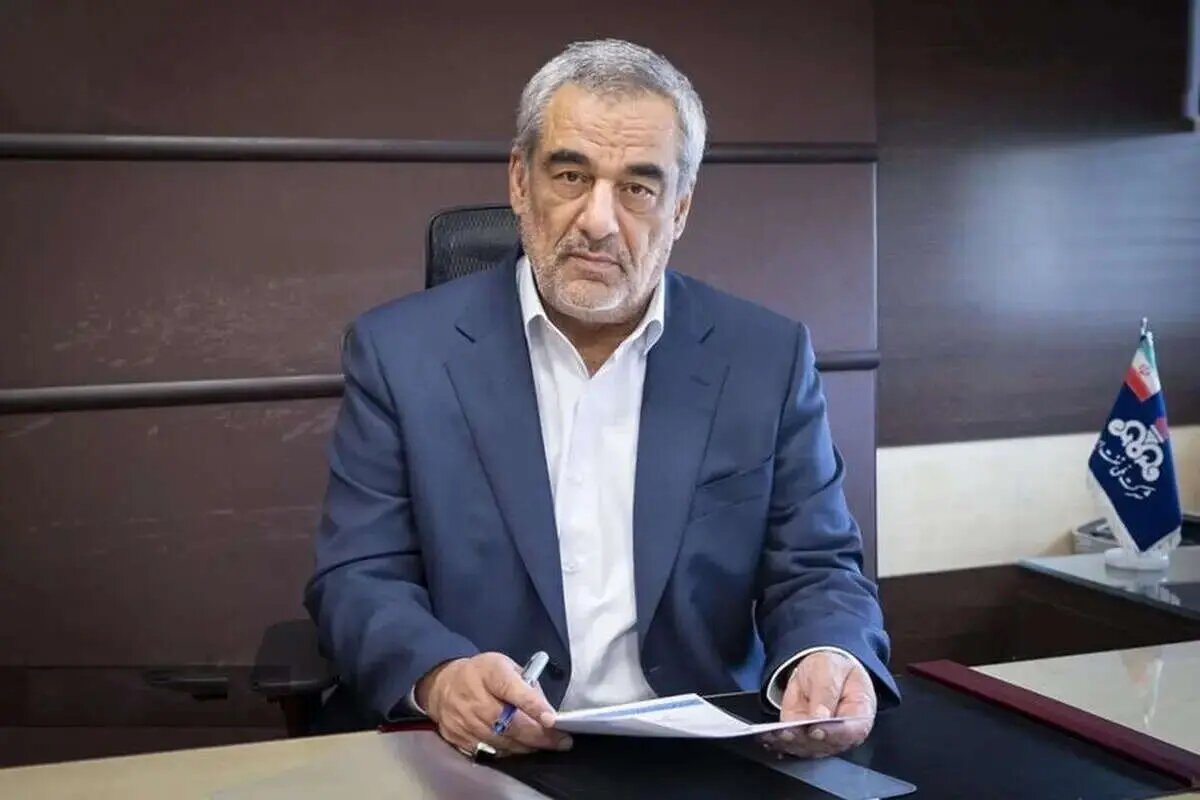
TEHRAN- According to Mehr News Agency, citing the Ministry of Oil, Hamid Bovard, on Tuesday, on the sidelines of his introduction ceremony as Acting Minister of Oil, said regarding the ministry’s most important plans: The industry’s current programs in production and development are continuing and are being pursued with greater speed and precision.
He added: Efforts are being made to pursue stronger policies in commerce and sales so that the oil industry, as in the past, shines with the help of all my colleagues.
The Acting Minister of Oil recalled regarding oil sales: Matters related to oil sales are being pursued as always, but I cannot disclose information in this area, and we continue to pursue our work in this field seriously.
The Acting Minister of Oil emphasized regarding energy management: I ask all dear people not to consume wastefully and to help in all areas of energy carriers so that this year we achieve stronger savings compared with previous years.
Bovard recalled regarding supplying fuel to industries in winter: Comprehensive decisions are made in the Fuel Committee in the government, and after a decision is made in the government, it is communicated to all agencies.
The Acting Minister of Oil, emphasizing the need for comprehensive management of fuel consumption and strengthening transmission infrastructure, stressed the importance of a macro-level view in oil industry decision-making.
According to Mehr News Agency, Hamid Bovard, on Tuesday, in a meeting with the managers of the National Iranian Oil Refining and Distribution Company at the company’s central building, in addition to expressing appreciation for the efforts and hard work of employees and managers, stressed the need to use a strategic, scientific, and comprehensive view in managing the issues of the oil industry, especially the refining and distribution of oil products.
Referring to his 35 years of activity in the oil industry, he added: In management meetings, to provide the possibility of more precise decision-making and a macro view of issues, information should be presented coherently and in the form of management summaries.
The Acting Minister of Oil, stating that in large organizations the high volume of activities sometimes causes main issues to be less visible amid details and daily challenges, announced: Looking from above and outside the organization’s daily atmosphere can help identify problems more precisely and find suitable solutions.
Bovard, emphasizing issues related to the gas and oil products sectors, stressed the need to adopt more precise decisions based on the country’s domestic capacities and stated: Given that a significant portion of the country’s needed resources is supplied domestically, instead of letting others make decisions for us, we must have plans and programs with an accurate understanding of the situation.
He considered the issue of fuel consumption management, especially gasoline and diesel, one of the country’s important issues and recalled: Measures regarding the smart fuel card are important, but special attention must be paid to threats and cyberattacks, and the security and stability of fuel-related systems must be guaranteed.
The Acting Minister of Oil emphasized: Managing consumption and implementing expert plans in the fuel sector can help gradually improve the country’s situation; however, the main goal should not be only managing current affairs, but we must move toward reforming the governance model and improving the way organizations are administered.
Bovard considered the use of universities and scientific centers essential for developing specialized training and training young forces, and continued: A foundation must be provided so that young forces, especially in their first years of service, are placed on the correct organizational path and their capacity and motivation are used effectively.
Referring to the importance of the main corridors for transferring and moving oil and oil products, he stressed the need to direct part of organizational activities and programs along these routes and said: Attention to these capacities can be effective in strengthening the oil industry’s infrastructure.
The Acting Minister of Oil also, referring to the country’s situation and the need to create hope in society, stated: In the current situation, effective and tangible measures must be taken to provide the ground for increasing people’s hope. Proper management of consumption and optimal use of resources are among these measures.
Bovard, likening this situation to a fish in water, added: Sometimes people within a large organization, due to their continuous presence in it, understand less the importance and real dimensions of the work being done. In difficult times, if the executive and expert groups of the oil industry had not been on the scene, the country’s problems could have become much broader.
Appreciating the performance of expert forces and the management team, he counted the existence of expertise, empathy, and cohesion among managers as strengths of the organization and expressed hope that, by strengthening the scientific, strategic, and coherent view, this capacity would develop in various oil industry companies.
Mohammad Sadeq Azimifar, CEO of the National Iranian Oil Refining and Distribution Company, also in this meeting, presenting a report to the Acting Minister of Oil, announced: The National Iranian Oil Refining and Distribution Company, under conditions of war, sanctions, and limited financial resources, by changing its management approach, has pursued four main axes: supply-demand balance, value chain development, human capital development, and data-driven governance.
He added: In this framework, six strategies were defined, including increasing and improving the quality of production, consumption management, infrastructure development, improving storage levels and fuel supply, human capital development, and research and digital transformation.
Azimifar recalled: In the production sector, with increased feedstock, implementation of key projects, and major overhauls, average gasoline production increased by about 17 percent; also, four quality improvement projects came into operation, and about three percent was added to product production.
The CEO of the National Iranian Oil Refining and Distribution Company said: In the consumption sector, the annual growth in gasoline consumption, which was about 6 percent, reached about zero through a set of management measures and became negative in Shahrivar. This year, gas oil consumption also decreased by about 2 to 3 percent. Price reforms, consumption management, and combating smuggling, in addition to reducing consumption, improved targeted subsidy resources.
He continued: CNG is one of the important capacities for consumption management, and after implementation of the third-price plan, consumption of this energy carrier increased by about 12 percent.
Azimifar noted: In the field of combating smuggling, about 66,000 active cases were organized, about 77,000 waybills were reviewed and corrected, and about 2,000 migrant fuel cards were identified and organized; at the same time, organizing about 600,000 fuel cards in various sectors is also underway.
The CEO of the National Iranian Oil Refining and Distribution Company said: The plan to assign identifiers to free cards at filling stations in Tehran is being implemented, and the cards will not be eliminated; rather, their use will be organized and misuse prevented.
He stated: In the infrastructure sector, in two years about one thousand kilometers have been added to the country’s pipeline network, and important projects are being completed and put into operation. In addition, for human capital development, a center has been launched where about 100 people have so far participated in its specialized courses.
Azimifar announced: The main goal is to curb consumption, increase production, strengthen storage, and reduce dependence on gasoline imports as much as possible. In the diesel sector, too, a plan has been drafted for reducing subsidies and managing consumption and exports, which can create considerable resources for the country.
The CEO of the National Iranian Oil Refining and Distribution Company emphasized: In various sectors, the company’s maximum capacity is being used to fulfill missions and increase revenue and productivity.
The Acting Minister of Oil considered the stability of energy supply, especially in the cold months of the year, to require full coordination in the gas production, transmission, and distribution chain.
According to Mehr News Agency, Hamid Bovard, on Tuesday, during a visit to the Dispatching Center of the National Iranian Gas Company, emphasizing the importance of this center’s role in managing the country’s gas network, stated: Stability of energy supply, especially in the cold months of the year, requires full coordination among the gas production, transmission, and distribution sectors, and dispatching has a key role in this regard.
During this visit, while hearing the issues and concerns of the managers of the National Iranian Gas Company, he stressed the need to follow up on and resolve existing challenges and to make maximum use of the gas industry’s capacities to maintain network stability.
The Acting Minister of Oil, appreciating the round-the-clock efforts of gas industry employees, emphasized: It is necessary to use modern technologies, upgrade monitoring systems, and increase operational readiness to face various conditions.
Saeed Tavakoli, CEO of the National Iranian Gas Company, also during this visit, explaining the measures taken to maximize gas supply, said: The company has used all its efforts to increase production, and for this purpose, part of the major overhauls has been carried out ahead of schedule.
Referring to the possibility of gas tension in some provinces of the country this winter, he added: Necessary scenarios have been defined for all provinces so that the company can plan for network management and gas supply according to the conditions of each region.
Managers and officials of the Gas Dispatching Center during this visit presented a report on the process of gas supply, transmission, and distribution, the network’s readiness for consumption management, and the plans foreseen to maintain the stability of gas flow. They also shared the most important issues and challenges in various sectors and their suggestions with the Acting Minister of Oil.
According to the Ministry of Oil, Hamid Bovard, Acting Minister of Oil, on Tuesday, visited the Dispatching Center of the National Iranian Gas Company and was informed of the latest status of monitoring, management, and control of the country’s nationwide gas network.
EF/MA
Leave a Comment